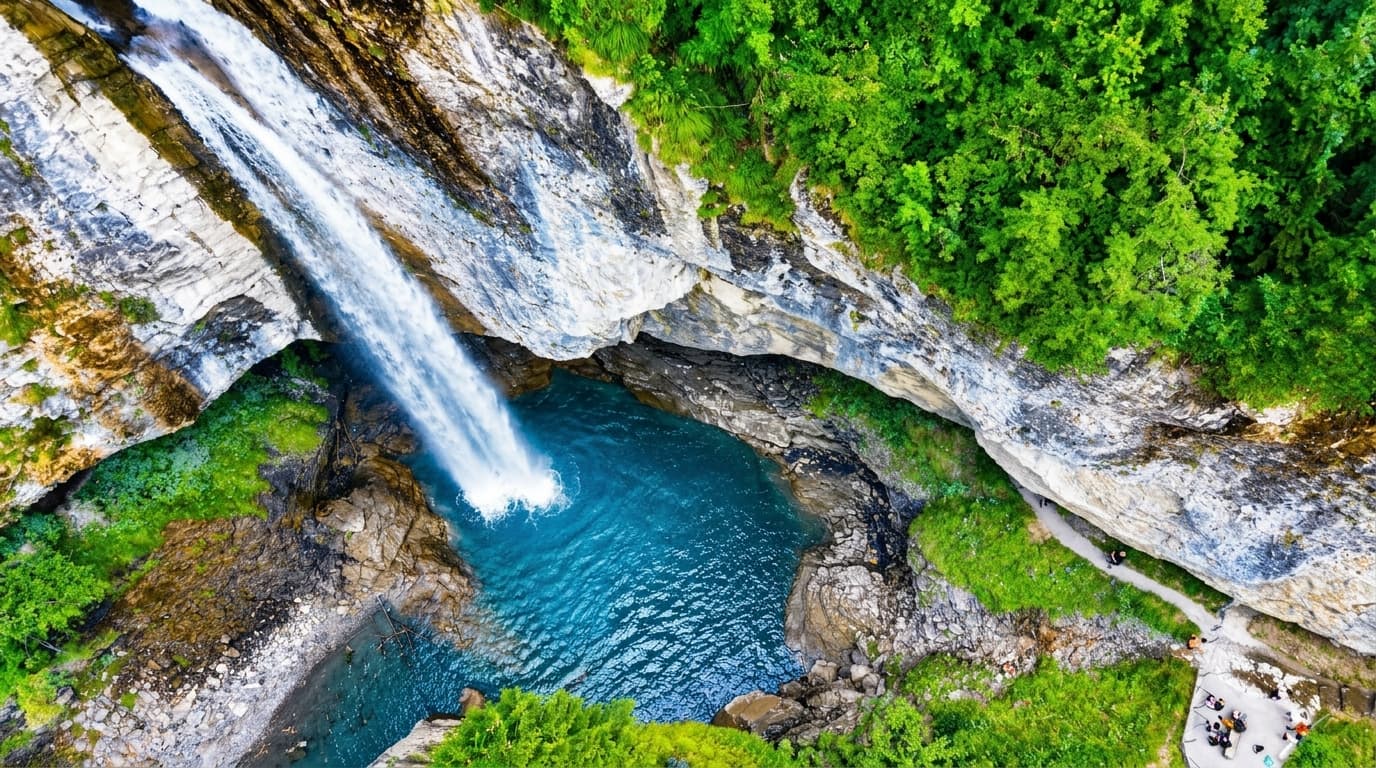
Berglistüber Waterfall, Glarus — A Thunderous Alpine Wonder
Tucked discreetly below the serpentine curves of the Klausen Pass road in Canton Glarus, Berglistüber is widely celebrated as one of Switzerland's most mesmerizing natural wonders. Here, the raging alpine torrent of the Fätschbach plunges 44 vertical metres over an ancient limestone precipice into a crystalline, turquoise-tinted rock basin, producing a mesmerizing roar and a perpetual halo of refreshing mountain mist.
The Experience
Visiting Berglistüber feels like stepping into a hidden primeval sanctuary. From the small parking pull-off by the former Bergli restaurant near Linthal, a gentle woodland trail winds downhill beneath towering beeches and moss-draped boulders. In fewer than ten minutes of walking, the roar of falling water fills the gorge, and the dense forest suddenly peels back to reveal the full grandeur of the falls.
The visual drama here is extraordinary. The cascade drops sheer into a deep bowl surrounded by sheer limestone strata that reveal millions of years of Alpine geologic history. The splash pool below glows in shades ranging from deep emerald to vibrant azure, depending on how the sunlight cuts through the canyon. On hot summer afternoons, the natural air-conditioning generated by the plume of fine water spray is wonderfully invigorating.
One of the most famous aspects of Berglistüber is the natural cavern carved directly behind the sheet of water. In past years, adventurous hikers could follow the narrow rock ledge to stand directly behind the thundering curtain of water. While local authorities frequently advise viewing from designated platforms due to loose shale and slick conditions, the perspective from the front and lateral banks offers arguably the most breathtaking vantage points for photographers and drone videographers.
For those wishing to make a full day of it, Berglistüber can be reached as part of longer alpine hikes originating from the car-free mountain village of Braunwald or down from Urnerboden. The surrounding Glarus Alps, recognized under the UNESCO Sardona Tectonic Arena, provide endless opportunities to observe the colossal forces that formed the Swiss mountains.
When to Visit
The waterfall is typically accessible from late spring through autumn (May to October), coinciding with the opening of the Klausen Pass road. May and June offer the most ferocious and voluminous flows as high-altitude snowfields on the Glärnisch massif thaw. By late summer and early autumn, the water volume moderates, allowing the pool to settle into its clearest and most vibrant turquoise hue while the surrounding deciduous trees turn brilliant amber and gold.