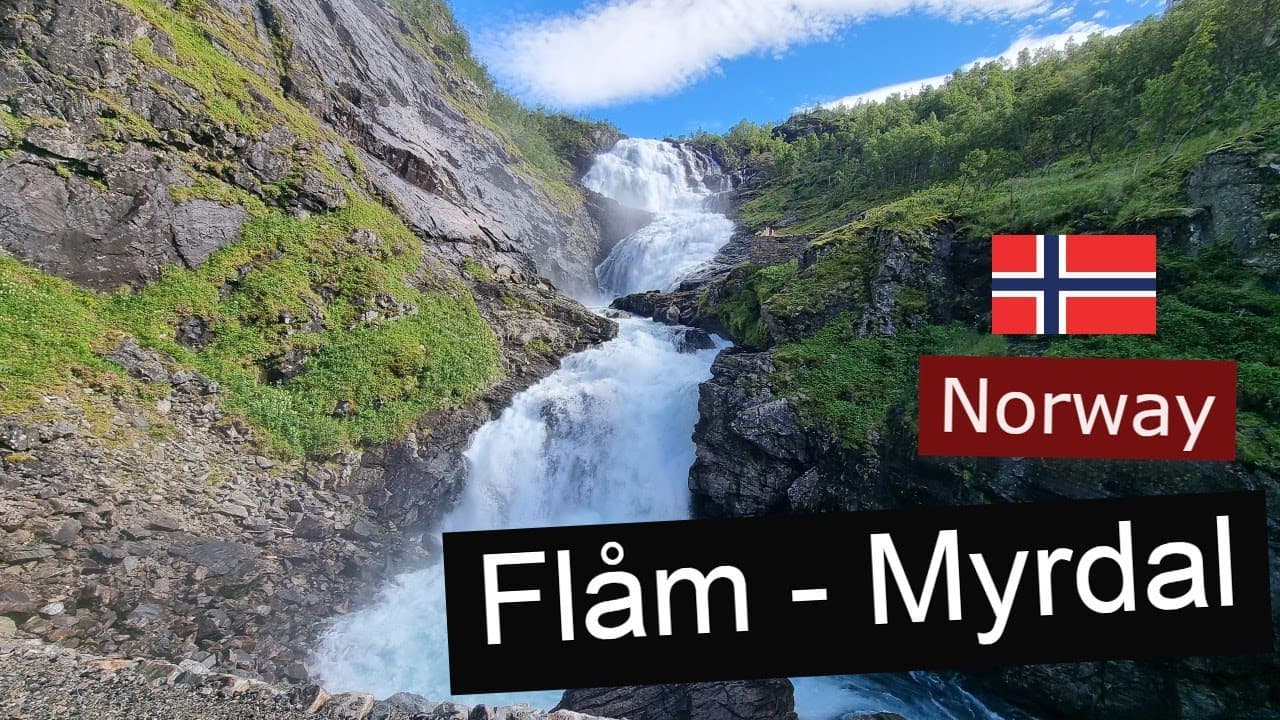
Kjosfossen Waterfall, Flåm — The Roaring Giant of the Flåmsbana
Crashing 225 vertical meters down sheer gneiss walls in a cloud of luminous mist, Kjosfossen is one of Norway's most iconic and thunderous natural wonders. Situated high in the rugged mountains of Vestland county, this colossal cascade is famous not only for its ferocious power, but for its complete isolation: there are no roads leading here. The only way to witness Kjosfossen in person is aboard the world-famous Flåm Railway (Flåmsbana).
The Experience
As the vintage green carriages of the Flåmsbana negotiate one of the world's steepest standard-gauge rail gradients, the roar of churning water announces Kjosfossen long before the train pulls up to the platform. Stepping out onto the sturdy wooden viewing terrace at Kjosfossen Station (670 meters above sea level), you are instantly enveloped by the deafening sound and icy spray of the raging cataract.
The scale of Kjosfossen is awe-inspiring. Fed by the high-alpine lake Reinungavatnet, the torrent plunges over an initial sheer drop before ricocheting across intermediate rock steps and churning into a deep plunge pool directly below the railway tracks. On sunny summer days, refracted light casts perpetual rainbow arches across the spray, creating an extraordinary spectacle for photography and 360-degree videography.
During the summer tourist season, passengers are treated to a charming theatrical nod to Norwegian folklore. As haunting Nordic melodies echo across the gorge, a crimson-clad figure appears on the rocks beside the falls. This is the mythical Huldra—a seductive forest spirit of Scandinavian mythology said to lure travelers deep into the mountains with her hypnotic singing.
Beyond its natural grandeur and folklore, Kjosfossen is also a marvel of sustainable engineering. A small hydroelectric power station built into the waterfall itself generates electricity that directly powers the Flåmsbana trains on their arduous climbs between Flåm and the high-altitude junction of Myrdal.
When to Visit
The Flåmsbana operates throughout the year, making Kjosfossen accessible in all four seasons. May and June provide the most furious water flow as high mountain snowpacks thaw. Summer (July and August) brings the daily musical Huldra performances and lush green foliage. In winter, portions of the roaring torrent freeze into monumental blue ice sculptures, offering a stark, dramatic contrast to the snowbound mountain landscape.